
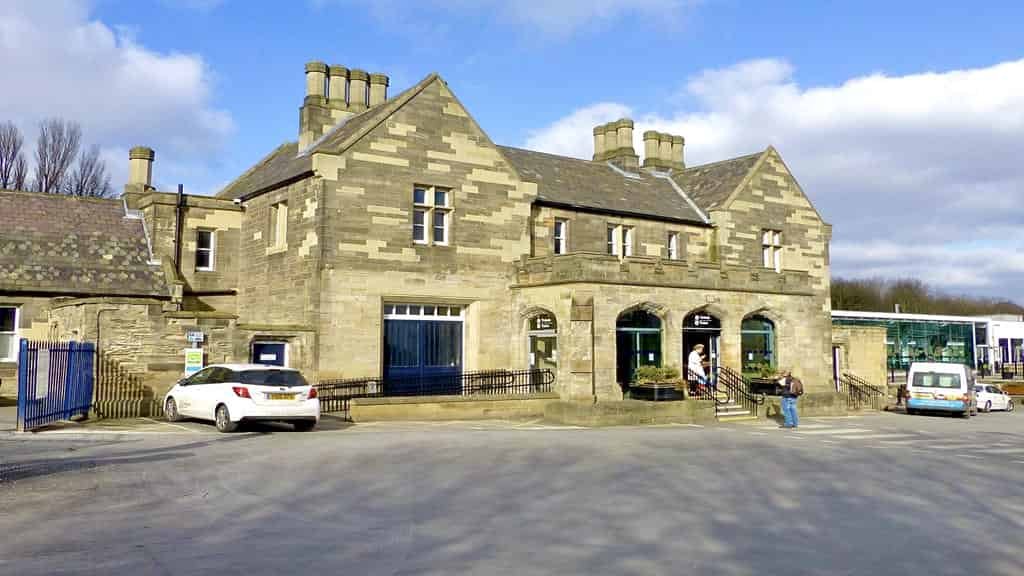
Key Takeaways for Durham Railway Station
- Durham Railway Station is located on Station Approach (accessed from North Road), part of the East Coast Main Line connecting major UK cities
- The station features modern facilities, including ticket offices, accessible platforms with lifts, toilets, and waiting rooms
- Taxi ranks are located outside the main station entrance for easy access
- The city centre (Market Place) is approximately a 10-20 minute downhill walk from the station
- North Road (just minutes from the station) has the main taxi rank and bus station
- The walk from the station passes through areas with shops and businesses
- Taxis are readily available at the station during most hours
- Local buses depart from the forecourt on Station Approach
- The station has step-free access to all platforms via lifts
- Ticket office hours: Monday-Friday 06:00-18:00, Saturday 07:00-17:00, Sunday 09:00-16:00
- The station offers parking, cycle storage, toilets, and waiting rooms on both platforms
Introduction to Durham Railway Station
Durham Railway Station stands as more than just a transport hub; it’s your first impression of one of England’s most captivating cities, and for many visitors, the beginning of an unforgettable journey into the heart of the North East.
City Centre Location
The official centre of Durham City is generally considered to be the Market Place.
This area, located on the Durham peninsula, has historically been the commercial and administrative heart of the city for centuries. It is easily recognisable by the following landmarks:
- The Statue of the Marquess of Londonderry
- The Town Hall
- The Church of St. Nicholas
While the Cathedral and Castle are the most famous and historically significant part of Durham, the Market Place is the functioning central hub where the main streets converge.
Durham Railway Station Location and Setting
Durham Railway Station sits on the East Coast Main Line, approximately 14 miles south of Newcastle and on the western side of the city. The station is located north of the city centre on a hill, at Station Approach, Durham DH1 4AA. This elevated position means visitors should be prepared for a walk into the historic core, though the journey is part of the Durham experience.
To the south, the railway line approaches the station via the spectacular eleven-arched Durham Viaduct, a major local landmark that has become one of the most photographed railway structures in the North East. The 19th-century philosopher John Ruskin famously described Durham’s skyline, including the Cathedral and this railway viaduct as “the Eighth Wonder of the World.”
Durham Railway Station Steeped in History
The present-day Durham Station opened on 1 April 1857, built by the North Eastern Railway on their Leamside to Bishop Auckland line. The station was redeveloped in 1871 when the North Eastern Railway developed a new line from Tursdale through Relly Mill Junction to Durham, and onwards from Newton Hall Junction through Chester-le-Street to Newcastle Central via the Team Valley. This became the current East Coast Main Line on 15 January 1872.
Durham has actually been served by four different stations throughout its history, though only the current one survives:
- Shincliffe (1839) – The first station, served by the Durham and Sunderland Railway
- Durham (Gilesgate) (1844-1857 for passengers) – Opened within the city boundaries but closed when the current station opened
- The current Durham Station (1857-present)
- Durham (Elvet) (1893-1931 for regular passengers) – Served the Durham-Sunderland branch
The original stone station building from 1857 still stands today and, following renovation between 2006 and 2008, now serves as the ticket hall and main concourse. The East Coast Main Line through Durham was electrified in 1991.
Modern Facilities and Award-Winning Service
Durham Railway Station underwent significant refurbishment between 2006 and 2008, winning Best Medium Station and Overall Station of the Year at the 2008 National Rail Awards. The renovation included:
- A new passenger lounge and glazed waiting area
- Modern toilets and a travel centre
- Lifts providing step-free access to both platforms
- Shops and improved facilities
- Free Wi-Fi connections
- New benches and seating areas
The station is owned by Network Rail and managed by London North Eastern Railway (LNER). It features two platforms. In 2019, Platform 1 was extended north to 230 meters to accommodate the new Azuma trains (Classes 800 and 801).
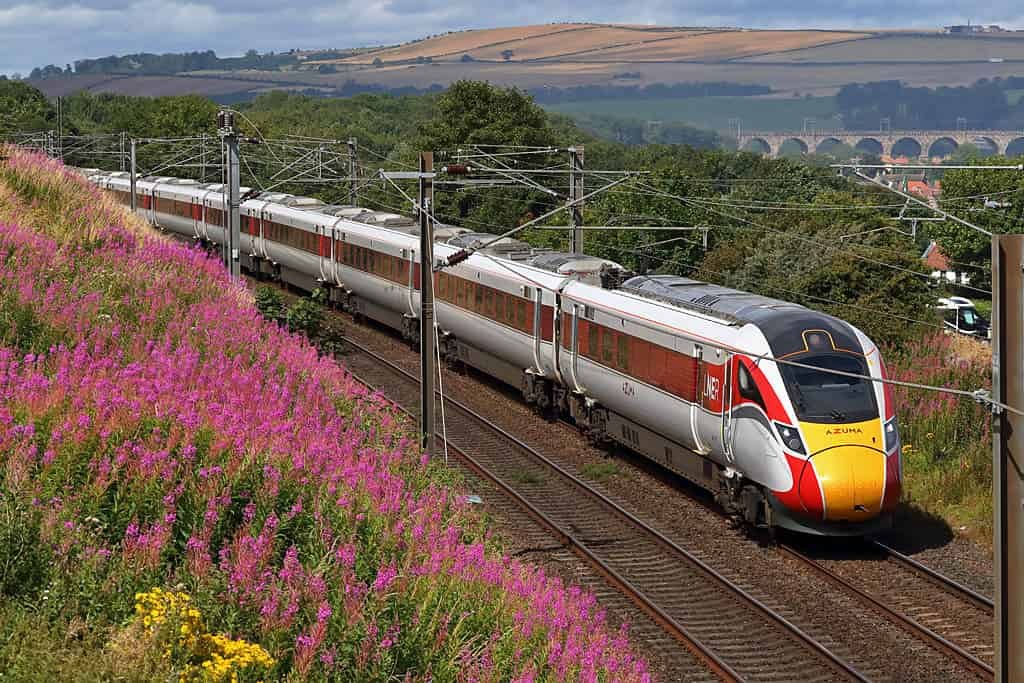
Ticket barriers were installed in 2009 but later removed in 2017 as part of Virgin Trains East Coast’s franchise commitment.
Connections and Journey Times
Durham’s strategic position on the East Coast Main Line makes it remarkably well-connected:
- London King’s Cross: Approximately 3 hours direct (LNER services run hourly)
- Edinburgh Waverley: Around 1 hour 45 minutes (hourly service)
- Newcastle: Just 12-15 minutes with frequent services
- York: Approximately 50 minutes
- Leeds: Around 1 hour via TransPennine Express
The station is also served by CrossCountry trains running between Edinburgh and Plymouth (via Birmingham and the South West), and Northern Trains services.
In 2023/24, Durham Station handled 2.604 million passengers, demonstrating its importance as a regional transport hub.
Getting from the Station to the City Centre
The walk from Durham Railway Station into the historic city centre takes 15-20 minutes downhill. Exit the station and follow the signs down to North Road. The route takes you down North Road and up Silver Street before emerging in the Market Place, with the Cathedral and Castle within easy reach.
Important note: The return journey is uphill, so allow 25 – 30 minutes when heading back to catch a train, particularly if carrying luggage.
Alternative transport options:
- Taxi: Rank located directly outside the main entrance (approximately 5 minutes to the city centre)
- Bus: The Cathedral Bus service links Durham train station and Framwellgate Waterside with the city centre, marketplace and Durham Cathedral and Castle. This runs Monday to Saturday, calling at North Road, Leazes Road underpass and Durham marketplace. Cathedral Bus Website
Durham County Council has recently completed improvements to cycle routes and pedestrian access to the station from the north of the city, including a new cycle path and upgraded road crossings on Framwellgate Peth.
Practical Tips for First-Time Visitors
Book in advance: LNER services to London offer significantly cheaper fares when booked ahead. The ticket office can be busy during peak times, so consider using self-service machines or booking online.
Luggage considerations: The downhill walk into the city is manageable with wheeled luggage, but the uphill return can be challenging. Consider using the taxi rank or arranging luggage storage at your accommodation.
Allow extra time: When departing, give yourself at least 20 – 30 minutes to walk back uphill to the station, more if you have heavy bags or mobility concerns.
The Durham Viaduct: Best Photo Spots. The ideal viewpoint for the Durham Viaduct is subjective, but here are two top angles: 1. Arches View: From Sutton Street near the Colpitts pub, you can frame the stunning stonework and arches. 2. Train Approach: Head to North Road to catch an approaching train as it crosses the viaduct toward the station.
The Station as a Gateway
For visitors arriving by train, Durham Railway Station offers a fitting introduction to this UNESCO World Heritage city. The elevated position provides glimpses of Durham Cathedral’s towers rising above the medieval cityscape, a view that has stirred travellers’ hearts since Victorian times and continues to signal arrival in one of England’s most beautiful and historic cities.
The station’s blend of Victorian heritage and modern facilities makes it a pleasant starting point for exploring Durham’s cathedral, castle, riverside walks, and vibrant city centre. Whether you’re visiting for a day trip or a longer stay, Durham Railway Station remains what it has been for over 160 years: the gateway to one of the North’s most treasured destinations.
FAQs about Durham Railway Station
Where is Durham Railway Station located?
Durham Railway Station is located on Station Approach, Durham DH1 4RB, accessed from North Road. It’s part of the East Coast Main Line.
How far is Durham Railway Station from the city centre?
The Market Place (official city centre) is approximately a 10-20 minute downhill walk from the station. North Road, with the main taxi rank and bus station, is just a few minutes away.
Are taxis available at Durham Railway Station?
Yes, taxi ranks are located outside the main station entrance. Taxis are readily available during most hours.
What are the ticket office opening hours?
Monday-Friday: 06:00-18:00, Saturday: 07:00-17:00, Sunday: 09:00-16:00.
Is Durham Railway Station accessible?
Yes, the station has step-free access to all platforms via lifts, making it fully accessible for wheelchair users and those with mobility issues.
What facilities are available at Durham Railway Station?
The station offers ticket offices, accessible platforms with lifts, toilets (including accessible toilets with RADAR key access), waiting rooms on both platforms, parking, cycle storage, and a travel centre.
How do I get from Durham Railway Station to the city centre?
You can walk (approximately 10-20 minutes downhill to Market Place), take a taxi from the ranks outside the main entrance, or catch a local bus from Station Approach.
Are there buses from Durham Railway Station?
The Cathedral Bus service links Durham train station and Framwellgate Waterside with the city centre, marketplace and Durham Cathedral and Castle. This runs Monday to Saturday, calling at North Road, Leazes Road underpass and Durham marketplace. Cathedral Bus Website
Is there parking at Durham Railway Station?
Yes, there is a station car park with 423 spaces available 24 hours a day.
What train companies operate from Durham Railway Station?
Durham is served by LNER (London North Eastern Railway), TransPennine Express, Grand Central, and other operators on the East Coast Main Line.
See our Durham Railway Station directory listing.