
A Lost Terminus: The Story of Durham Elvet Station
Durham Elvet Station, a name now lost to most residents of the city, was once a bustling railway terminus, echoing with the sounds of steam engines and the chatter of passengers. Though it has long since vanished from the landscape, its story offers a fascinating glimpse into the history of rail travel in Durham and the changing fortunes of the city’s transport network.
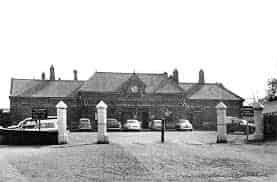
Opened on July 24, 1893, by the North Eastern Railway, Elvet Station was a late addition to Durham’s railway infrastructure. It was the terminus of a new branch line that extended from the Durham to Sunderland railway, crossing the River Wear to a site at the junction of Old Elvet, Whinney Hill, and Green Lane. The station was designed by the renowned North Eastern Railway architect, William Bell, and featured a spacious island platform, though, unusually, it lacked a roof. The main building housed a large waiting hall and was fronted by an office range with a distinctive central clock gablet.
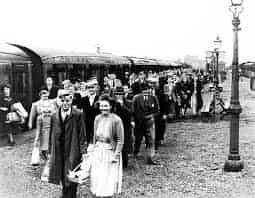
The station was built to provide a more direct service to Sunderland and Hartlepool, but its passenger service was to be short-lived. By January 1, 1931, regular passenger services ceased, a victim of changing travel patterns and the rise of road transport. However, this was not the end for Elvet Station. It found a new lease of life as the destination for the hugely popular Durham Miners’ Gala. Special trains, packed with miners and their families, would arrive at Elvet for the annual “Big Meeting,” keeping the station in use for one day a year until 1953.
After its closure to regular passengers, the station buildings were repurposed. In 1949, the County Council took over the site, using the station buildings as offices for the motor taxation department. However, the station’s final demise was not far off. The last train, a circus train, departed in 1953, and the station was fully closed on January 11, 1954. The station buildings were demolished in 1963 to make way for new developments.
Today, there is little to suggest that a railway station ever stood at the Old Elvet location. The site is now occupied by the Durham Magistrates’ Court and an NHS office block. The iron bridge that once carried the railway across the Wear is also gone. The story of Durham Elvet Station is a reminder of the ever-evolving nature of our urban landscapes and the lost heritage that lies just beneath the surface of our modern cities.
FAQs about Durham Elvet Station
When did Durham Elvet Station operate?
The station opened to the public on July 24, 1893. It ceased its regular passenger services on January 1, 1931, but continued to be used for goods traffic and special events. The station closed completely on January 11, 1954.
Where exactly was the station located?
It was situated in the Elvet area of Durham, at the junction where Old Elvet, Whinney Hill, and Green Lane meet.
Can I visit the station today?
No, unfortunately, the station no longer exists. The buildings were demolished in 1963. The site is now occupied by the Durham Magistrates’ Court and an NHS office block, so there are no visible remains of the station to see.
Why did it close to passengers so quickly?
The passenger service to and from Elvet was not a commercial success. After less than 40 years, the low passenger numbers led to the withdrawal of regular services in 1931.
What was the station’s connection to the Durham Miners’ Gala?
After it closed to regular passengers, Elvet Station found a new purpose as the main arrival point for the famous Durham Miners’ Gala. For one day each year (except during the war), special trains would bring miners, their families, and their banners to the city, using the station until its final closure.
What was the last train to ever use the station?
While it was primarily used for the Miners’ Gala in its final years, one of the very last trains to use the station was reportedly a circus train in 1953.
A Tale of Two Stations: Elvet and the Main Line
Think of them as serving two different purposes for the city:
- Durham Railway Station (the one still in use today): This was, and is, the city’s main-line station. It sits on the East Coast Main Line, the major north-south artery connecting London and Edinburgh. Its primary function was to connect Durham to other major cities across the country.
- Durham Elvet Station: This was a terminus station for a local branch line. Its purpose was to handle regional traffic, specifically running services eastwards towards Sunderland and Hartlepool. It was not designed for long-distance travel.
So, while both were operated by the North Eastern Railway for a time, they were not integrated. A passenger arriving in Durham from Sunderland at Elvet Station who wanted to catch a train to York from the main station would have had to exit Elvet, and then walk or find other transport across the city to get to the main Durham station to continue their journey.
Further Reading
Durham Elvet Station