
I. Introduction: The Grand Revival in Baroque Stone
Durham City is celebrated worldwide for its medieval core, dominated by the iconic Cathedral and Castle rising above the River Wear. Yet just beyond this UNESCO landscape, the city reveals a second architectural story, one rooted in late-Victorian ambition and the evolution of modern civic power. On the historic street of Old Elvet stands the Old Shire Hall Durham, now home to the luxury Hotel Indigo Durham. This striking building represents far more than an elegant boutique hotel; it is a physical chronicle of more than a century of administrative authority, political transformation, academic leadership, and adaptive reuse.
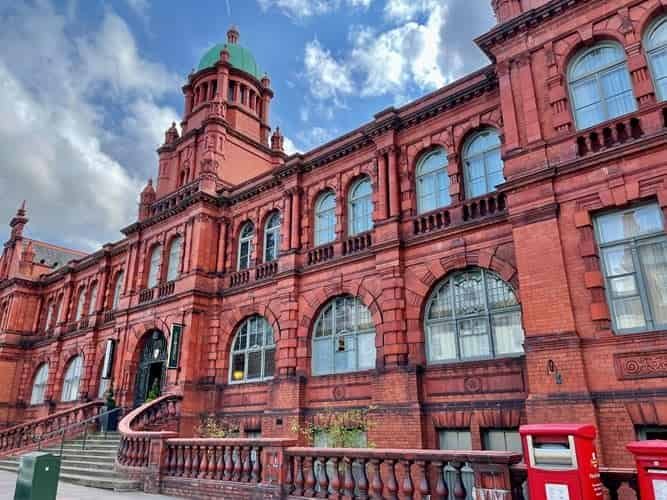
Constructed between 1896 and 1898, the building is a commanding example of the Baroque Revival style created by architects Harry Barnes and Frederick Coates. Its monumental stone façade was designed to project permanence and confidence at a time when newly formed county councils needed to assert their authority among long-established judicial institutions. Listed at Grade II in 1988 for its historical and architectural importance, the Old Shire Hall remains a rare survivor of grand late-Victorian municipal architecture. Its journey through three distinct lives, municipal headquarters, academic administrative centre, and now a premium hotel, offers a captivating lens through which to trace the civic and cultural evolution of Durham.
II. Phase One: The Zenith of Municipal Power (1898–1963)
A New Seat of Local Government
The Old Shire Hall was born from sweeping national reforms. The Local Government Act of 1888 established elected County Councils across England, requiring new administrative infrastructure. Durham County Council initially met in the nearby courthouse, but it quickly became clear that the facility was inadequate for sustained governance. A site on Old Elvet, once occupied by large residential properties, was selected as the ideal location for a grand municipal headquarters.
The foundation stone was laid in April 1896 by the Earl of Durham, and the building opened on 26 July 1898. Constructed by David and John Rankin at a cost of £14,000, it embodied a deliberate architectural message. The imposing Baroque Revival style, rich, bold, and assertive, signalled the authority of the newly empowered local government. For the next 65 years, it served as the unquestioned centre of County Durham’s political and administrative life.
A Stage for Political Change
Beyond its bureaucratic function, the Old Shire Hall gained national significance in 1909 when County Durham became home to Britain’s first all-Labour County Council. This milestone was rooted in the political awakening of the industrial North East, particularly the power of the mining community. Figures such as miner and political leader Peter Lee, later the first chairman of a Labour-controlled county council, emerged from this environment.
For today’s visitor, understanding this context reshapes the experience of the building. Rooms now used for dining, conferencing, and leisure once hosted crucial debates that shaped early twentieth-century municipal governance, welfare reforms, and labour politics. The energy of these transformative years remains etched into the very spaces where decisions were once made.
The End of an Era
By the early 1960s, the expanding responsibilities of post-war local government outgrew the building’s capacity. In 1963, the County Council relocated to modern offices at Aykley Heads, marking the end of the Old Shire Hall’s first life but opening the gateway to its second.
III. Phase Two: Five Decades of Academic Leadership (1963–2012)
A Smooth Transition and Continued Prestige
The Old Shire Hall’s next chapter began immediately after the County Council moved out. Durham University, itself expanding in scope and reputation, adopted the building as its administrative headquarters. This seamless transition allowed the Hall to retain its role as a centre of regional authority, now academic rather than political, which greatly contributed to its long-term preservation.
Throughout the latter half of the twentieth century, the building hosted senior university offices, strategic planning departments, and administrative leadership. Its continuous occupation by a major institution protected it from the neglect that afflicted many Victorian civic buildings during this period.
Vacancy and a Turning Point
Durham University vacated the Old Shire Hall in 2012 upon the completion of the purpose-built Palatine Centre. For the first time since 1898, the building briefly stood empty. This short vacancy period, lasting until redevelopment plans gained momentum around 2014, underscored the urgency to ensure its survival. Fortunately, its prominence, central position, and listing status made it a prime candidate for investment rather than decline.
IV. The £15 Million Architectural Transformation (2014–2018)
Acquisition and Ambitious Redevelopment
In the mid-2010s, the Old Shire Hall was acquired for commercial redevelopment, leading to a high-profile £15 million transformation. Developers undertook the challenge of converting the historic structure into a contemporary luxury hotel while preserving its architectural integrity. The result, unveiled in 2018, was Hotel Indigo Durham: an 83-bedroom property featuring distinctive interior design, the Marco Pierre White Steakhouse Bar & Grill, and the Rotunda Cocktail Bar & Lounge.
Meeting the Challenge of a Listed Building
As a Grade II listed structure, the Old Shire Hall’s most architecturally significant areas, particularly the ground floor, required careful preservation. Architects Howarth Litchfield and engineering teams were tasked with integrating modern hospitality infrastructure into a nineteenth-century shell without compromising its heritage character.
This included:
- Routing new mechanical and electrical systems discreetly
- Installing modern en-suite bathrooms and climate control
- Reinforcing existing structural elements without altering protected features
- Preserving original decorative and material elements wherever possible
The renovation succeeded in blending modern function with historical substance, ensuring the building’s future while retaining its dramatic Victorian presence.
V. A Traveller’s Dialogue with the Past: Architecture Then and Now
Hotel Indigo Durham offers guests a rare opportunity to experience a building that harmoniously merges centuries of civic significance with contemporary boutique design. The interiors are styled around themes celebrating Durham’s academic and ecclesiastical heritage, creating an atmosphere that simultaneously embraces past and present.
Preserved Features
Several original elements were sensitively restored and integrated into the new design:
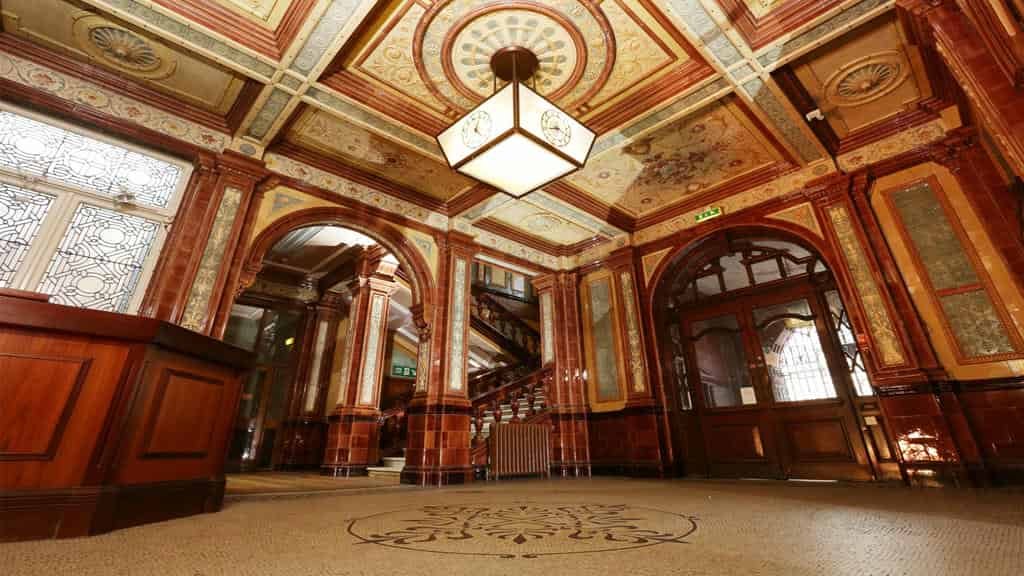
- Marble staircases and timber panelling remain central to the hotel’s grand entrance.
- Stained glass windows continue to cast coloured light across the building’s public spaces.
- Original parquet flooring has been restored in key corridors.
- Legacy furniture and fittings from the former council chambers were adapted into bespoke interior pieces, allowing the building’s administrative past to remain tangible.
The Dramatic Repurposing of the Debating Chamber
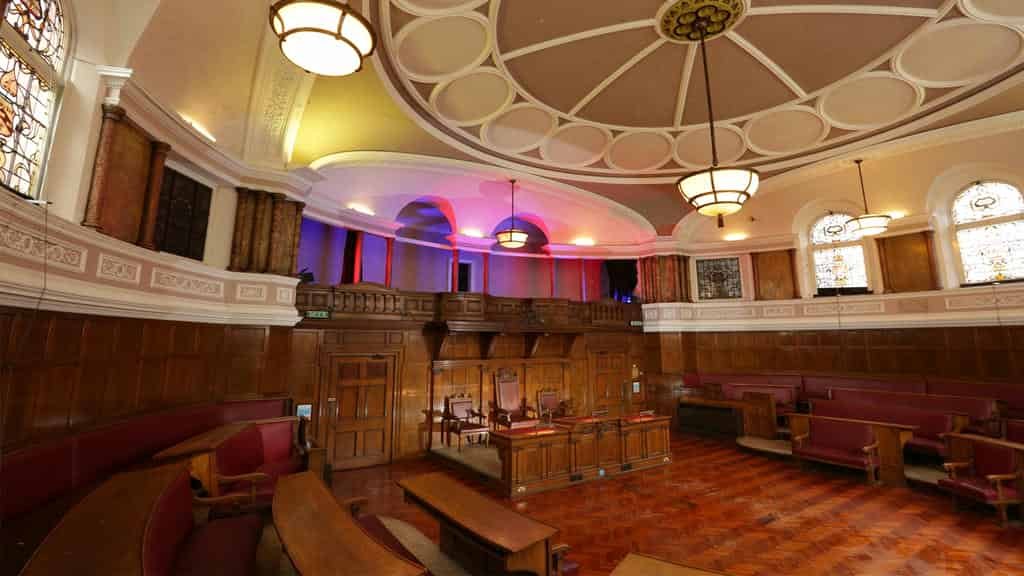
The most striking adaptive reuse is found in the former circular debating chamber, once the core of County Durham’s political life and later the seat of the University Senate. Today it houses:
- The Marco Pierre White Steakhouse Bar & Grill, seating 88 guests under the dramatic rotunda.
- The Rotunda Cocktail Bar & Lounge, a space that retains its Victorian character while offering a modern social setting.
This thoughtful transformation invites visitors to occupy a room where major political and institutional decisions once shaped the region’s history.
VI. Conclusion: A Future Rooted in History
The Old Shire Hall embodies more than a century of rapid institutional evolution. From its origins as a symbol of late-Victorian civic authority, through decades of academic administration, to its current life as a luxury hotel, the building has repeatedly adapted while retaining its architectural and cultural significance.
The £15 million redevelopment not only preserved a key heritage asset but also positioned the building to contribute actively to Durham’s tourism economy. Local projections suggested that the hotel could draw thousands of additional visitors to the city each year, reinforcing the Hall’s role in Durham’s ongoing narrative.
Today, guests stepping into Hotel Indigo Durham encounter more than comfort and design; they enter a living continuum of municipal history, political transformation, and architectural resilience. The tactile details of original woodwork, the drama of the rotunda, and the filtered light of stained glass together narrate a story that few modern hotels can match. Through its latest incarnation, the Old Shire Hall invites travellers to experience Durham not just as a destination, but as a layered historical landscape shaped across three remarkable institutional lives.
FAQs about the Old Shire Hall, Durham
What is the Old Shire Hall in Durham?
The Old Shire Hall is a Grade II listed late-Victorian civic building on Old Elvet in Durham City. Built between 1896 and 1898 as the headquarters of Durham County Council, it later became the administrative base of Durham University and now operates as Hotel Indigo Durham.
Why was the Old Shire Hall built?
It was constructed following the Local Government Act of 1888, which established elected county councils across England. Durham County Council required a permanent headquarters that projected authority and stability.
When did Durham have the first all-Labour County Council?
In 1909, just over a decade after the building opened, Durham achieved the first all-Labour County Council in Britain, marking a significant moment in national political history.
How long did Durham University use the Old Shire Hall?
The University occupied the building from 1963 until 2012, using it as its main administrative headquarters before relocating to the modern Palatine Centre.
What original features remain inside the building?
Restored features include marble staircases, stained glass windows, parquet flooring, timber panelling, and adapted legacy furnishings from its municipal and university days.
What happened to the former council debating chamber?
The dramatic circular debating chamber was transformed into the Marco Pierre White Steakhouse Bar & Grill, preserving its architectural presence while giving it a new cultural function.
Why is the Old Shire Hall important to Durham’s heritage?
It represents over a century of civic, political, academic, and architectural history. Its survival and sensitive redevelopment make it a key example of successful adaptive reuse.
Further Reading and Sources
- Historic England – Old Shire Hall (Grade II Listing)
- Shire Hall, Durham – Wikipedia
- Peter Lee (Trade Unionist) – Wikipedia
- England’s North East – Old Elvet and Shire Hall
- Atelier Ten – Engineering Consultants for Redevelopment