
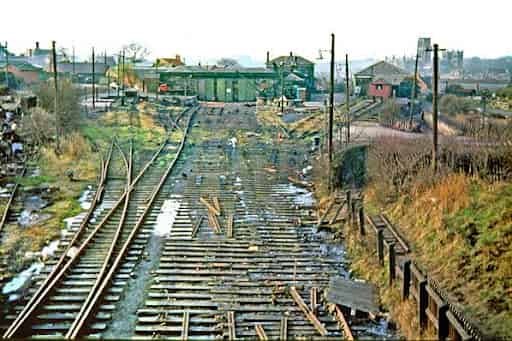
Introduction to Gilesgate Station
Gilesgate Station, a now-defunct railway station in the Gilesgate area of Durham City, holds a unique place in the region’s railway history. Though its time as a passenger station was brief, its story reflects the rapid expansion and strategic realignments of Britain’s burgeoning railway network in the 19th century.
A Grand Beginning
Opened on April 15, 1844, Gilesgate Station was designed by the renowned architect George Townsend Andrews for the Newcastle & Darlington Junction Railway. At the time of its opening, it was the main station for Durham and served as the terminus for the Durham Branch of the Newcastle & Darlington Junction Railway, which later became part of the Leamside Line. This made it a crucial link for passengers travelling to London, with journeys to Gateshead taking just over nine hours.
The station itself was an impressive structure, built of sandstone ashlar with a Welsh slate roof. The passenger building was a single-storey, seven-bay structure with a central projecting bay featuring a keyed arch. The complex also included a trainshed, carriage sidings, and a wooden goods shed.
A Brief Passenger Service
Despite its initial importance, Gilesgate Station’s life as a passenger terminus was remarkably short. The station’s location, while convenient for the Gilesgate area, was not ideal for accessing the city centre. As a result, it closed to passengers on April 1, 1857, just thirteen years after its grand opening.
A Long Life in Goods
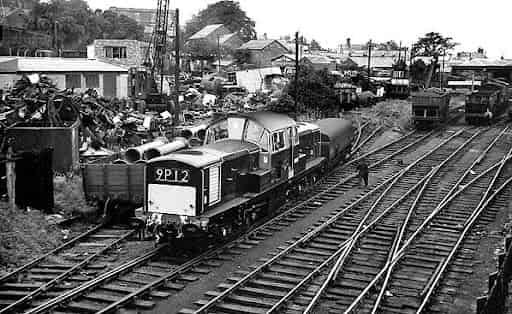
The closure to passengers did not spell the end for Gilesgate Station. It was quickly converted into a goods station, a role it would fulfil for more than a century. The station was a vital hub for freight traffic, with coal from nearby collieries like Kepier and Grange being a primary commodity. The station was known as “Durham Goods” and even appeared on maps as “Durham and Belmont – Goods Trains”.
The End of an Era and a New Beginning
Gilesgate Station finally closed to all traffic on November 17, 1966, and the tracks were lifted shortly after. For a time, the building was used as a builder’s merchant. However, the station building, a Grade II listed structure, has been preserved and repurposed. Today, the former station is home to a Travelodge hotel and a restaurant, a testament to its enduring architectural significance. The street name “The Sidings” near the hotel serves as another subtle reminder of the site’s railway past.
While its time as a passenger station was fleeting, Gilesgate Station played a significant role in the industrial and commercial life of Durham for over a century. Its story is a fascinating chapter in the history of the North East’s railways, and its preserved building stands as a tangible link to a bygone era of steam and industry.
FAQs about Gilesgate Station
When did Gilesgate Station operate?
The station first opened to passengers on April 15, 1844. However, its passenger service was short-lived, ending on April 1, 1857. It continued to operate as a goods station for over a century until it closed completely on November 17, 1966.
Why did it close to passengers after only 13 years?
The station’s location was considered inconvenient and not ideal for providing access to Durham’s city centre. This led to its quick closure as a passenger terminus.
What was the station used for after passenger services stopped?
After 1857, the station was converted into a busy goods station, officially known as “Durham Goods.” It was a key hub for freight, particularly for transporting coal from local collieries. It served this purpose until its final closure in 1966.
What is the old station building used for today?
The original station building, which is a Grade II listed structure, has been preserved. It has been repurposed and is now a Travelodge hotel and a restaurant, allowing the historic building to remain in public use.
Who was the architect of Gilesgate Station?
The station was designed by the notable railway architect George Townsend Andrews, who was responsible for many station designs for the railway magnate George Hudson.
The connection between Gilesgate Station and the current Durham Railway Station
Here’s a breakdown of their relationship:
A Problem of Location and Engineering
A Problem of Location and Engineering
Gilesgate Station was built in 1844 on a branch line (the Leamside Line). While it provided Durham with a connection to the growing rail network, its location was far from ideal. It was situated at the bottom of Gilesgate bank, a significant distance from Durham’s city centre, which lies nestled in a loop of the River Wear. The city’s hilly and challenging terrain made it impossible for the original railway line to get any closer.
A New Main Line and a New Station
In the 1850s, the newly-formed North Eastern Railway (which had absorbed the original railway companies) planned a new, more direct main line route that would become part of the East Coast Main Line we know today. This new route was engineered to cut directly through Durham.
To achieve this, they built the impressive Durham Viaduct, which allowed the railway to cross the city at a high level. On this new line, they constructed a new, far more centrally located station.
The Direct Replacement
The connection is crystal clear in the timeline:
- The current Durham Railway Station opened on April 1, 1857.
- Gilesgate Station closed to passengers on the exact same day: April 1, 1857.
The opening of the new station made Gilesgate immediately redundant for passenger traffic. The new station was superior in every way for travellers: it was centrally located, easily accessible from the city centre, and situated on the new, faster main line.
In Summary:
The current Durham Railway Station was built to serve a new, more direct main line and was placed in a much more convenient, central location. Its opening immediately caused the closure of Gilesgate Station to passengers.
After this, the two stations served entirely different purposes:
- Durham Station became the city’s sole passenger station.
- Gilesgate Station was repurposed as a goods station, handling freight and coal for another 109 years before closing for good.
Further Reading
- Old Railway Station, Gilesgate | Co-Curate
- Durham (Gilesgate) railway station – Wikipedia
- Durham (Gilesgate) railway station – Wikipedia, Gilesgate Railway Station
- FORMER GILESGATE RAILWAY STATION, City of Durham – 1161515 | Historic England